
Why Most Networking Events Don't Work (And What Does)
The future of networking isn't networking. It's doing things together.
7 min read
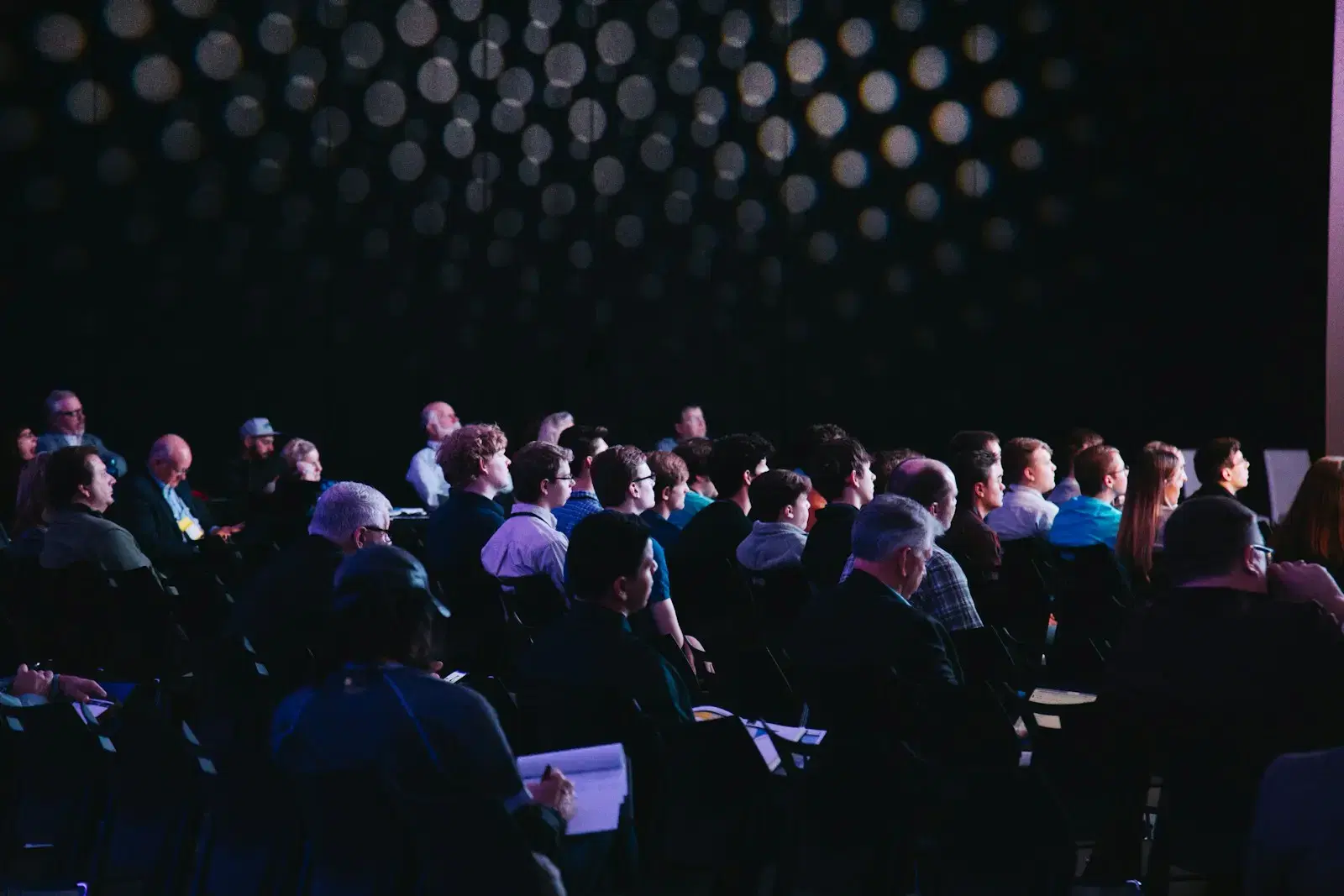
There's a specific failure mode in professional networking that nobody talks about directly: you show up to a conference, a mixer, a happy hour, and within minutes you're performing. Not connecting. Performing. You've got a version of yourself you've curated for professional contexts, the one you think will impress, will be useful, will lead to opportunities. And everyone else in the room is doing the same thing. What you get is a room full of people being versions of themselves that aren't actually them, trying to build relationships with other people who aren't actually there.
This isn't a problem with your social skills. It's a structural problem with the format. Business-card networking, elevator pitches, the implicit hierarchy of who's “worth talking to”: these mechanics ensure that genuine connection becomes impossible. And we keep doing it because the alternative feels riskier: showing up to something where you're not positioning yourself, where the conversation isn't a strategy, where you can't extract any obvious value.
After hundreds of these events, I've figured out what actually works instead. And it requires breaking almost every rule that professional networking teaches you.
The Standard Networking Event
You know the drill. You walk into a venue. There's a name tag station. People are standing in small clusters, holding drinks, making eye contact with strangers while trying to decide whether to approach. The air is thick with a particular kind of anxiety: the anxiety of performing.
Because that's what networking events are: performances. Everyone is presenting their best professional self. Everyone has a pitch. Everyone is scanning the room for someone who might be “useful.” The conversations are superficial by design. You have 3 to 5 minutes before someone's eyes start drifting to the next person they should talk to.
Here's what typically happens:
- You exchange pleasantries with 8 to 15 people
- You collect a stack of business cards or LinkedIn connections
- You have 2 to 3 conversations that feel genuinely interesting
- You leave feeling exhausted, not energized
- You follow up with maybe 1 person
- Nothing meaningful comes of it
Sound familiar? It's not just you. Research on networking events consistently shows that people overestimate the value of the connections they make and underestimate the emotional cost of making them. The ROI on traditional networking is abysmal, and yet we keep going because the alternative, not networking at all, feels worse.
Why the Format Fails
The problem isn't that people don't want to connect. The problem is that the format creates exactly the wrong conditions for genuine connection. Here's what I mean:
Forced conversation kills authenticity
When two people approach each other with the explicit goal of “networking,” both are performing. You're not being yourself. You're being the version of yourself that you think will be impressive or useful to the other person. That performance prevents the kind of vulnerability and honesty that real relationships require.
The pitch dynamic creates hierarchy
Networking events implicitly sort people into “useful” and “not useful.” You're constantly evaluating: can this person help me? Should I spend more time here or move on? This mental calculus is exhausting and dehumanizing for everyone involved.
Large groups dilute attention
A room of 200 people sounds like 200 opportunities. In practice, it means you can't go deep with anyone. The pressure to “work the room” prevents you from spending enough time with any single person to build actual rapport.
One-time interactions don't build trust
Trust takes time and repeated exposure. Meeting someone once at a loud bar for 5 minutes doesn't create a foundation for a real professional relationship. At best, it creates a weak tie that fades within weeks.
Standing around is the worst activity for bonding
Psychologists have known for decades that people bond more effectively when they're doing something together. Standing in a circle holding drinks is the social equivalent of a blank page. There's nothing to spark natural conversation, so you default to scripts. “What do you do?” “How do you know the host?” “Have you been to one of these before?”
The NY Tech Week Experiment
Last year, I took Escape to New York Tech Week. We hosted five events over the course of the week. Two of them taught me more about networking than years of attending panels and mixers.
The first was a traditional-ish networking event at a rooftop bar. Nice venue, good turnout, free drinks. People stood around, exchanged LinkedIn connections, and left. It was fine. Forgettable.
The second was the Tech Walk. We organized a group walk through lower Manhattan, starting at a park, walking for about an hour, ending at a restaurant. 454 people signed up. And something completely different happened.
People paired up naturally as they walked. The conversation was different: more personal, more relaxed, more honest. Nobody was pitching. Nobody was scanning the room (there was no room). People talked about their lives, their struggles, their ideas. By the time we reached the restaurant, strangers were making dinner plans.
The Tech Walk produced more genuine connections in one hour than the rooftop event produced all evening. And the only difference was the format: walking together instead of standing around.
What Actually Works
After hundreds of events and thousands of conversations with organizers and attendees, I've identified four principles that consistently produce meaningful connections:
1. Shared activities over standing conversations
The single most effective change you can make to any networking event is adding an activity. Walk together. Cook together. Play a game together. Build something together. When people are focused on a shared task, conversation happens naturally, without the performance anxiety of “networking.”
This isn't new insight. It's basic social psychology. Psychologist Arthur Aron's research on interpersonal closeness shows that shared novel experiences accelerate relationship building. When you do something new together, you create a shared memory, and shared memories are the foundation of real relationships.
2. Small groups over large ones
The ideal group size for genuine connection is 6 to 12 people. Small enough that everyone can participate in the conversation. Large enough that there's diversity of perspective. The intimacy of a small group eliminates the “working the room” dynamic and creates space for vulnerability.
The best events I've been to are dinners for 8, hikes for 10, workshops for 12. Not conferences for 500.
3. Repeated exposure through recurring events and communities
Trust is built through repetition, not intensity. Seeing someone every Tuesday at a run club builds a stronger relationship than a single 3-hour dinner. The repeated exposure gives you the chance to see different facets of a person: how they act on good days and bad days, what they care about beyond their elevator pitch, who they really are when they're not performing.
Communities are the infrastructure for repeated exposure. When you join a group, whether it's a run club, a book club, or a founders group, you see the same people regularly. That consistency is where real friendships form.
4. Interest-based matching over industry-based networking
Traditional networking sorts people by industry. Tech people network with tech people. Finance people network with finance people. But the most valuable connections often come from outside your industry, from people who share your interests, not your job title.
When you join a hiking group, you meet lawyers and designers and teachers and founders who all like hiking. The conversations are richer because they're not about work. And paradoxically, the professional value is higher because you're building relationships with people who actually like you, not people who want something from you.
How Escape Is Designed for This
I didn't start Escape to fix networking. I started it to help people make real friends. But it turns out those are the same problem. Meaningful professional connections and meaningful personal connections are built the same way: through shared experiences, repeated exposure, and genuine mutual interest.
Here's how the platform embodies these principles:
Interest-based discovery. Events and communities are organized by what you care about, not what industry you're in. You find people through shared interests, and the connections that form are deeper because of it.
Communities for repeated exposure. When you join a community on Escape, you're not just RSVPing to a one-time event. You're joining a group of people you'll see again and again. That's where trust builds.
Recurring events. Organizers can create events that repeat weekly, biweekly, or monthly. The same group of people, the same time, the same activity. It's the structure that makes friendships possible.
AI compatibility. Our compatibility engine analyzes 8 dimensions of how well two people might connect: interests, communication style, values, location, and more. It surfaces people you're likely to genuinely get along with, not just people in your industry.
Vibe. You can tell someone from the same event that you'd like to connect. If they feel the same way and vibe you back, you're matched and can start a conversation. It's a natural way to follow up on in-person chemistry without the awkwardness of cold outreach.
The One-Week Test
If you're skeptical, here's an experiment. Pick a week and attend two events: one pure-networking event and one activity-based event. I'll predict the result.
The networking event: A conference mixer, happy hour, or LinkedIn group meetup. The format you already know.
The activity-based event: A cooking class, run club, book discussion, or poker night. Something where you're doing something together, not just standing with drinks.
Then measure three things:
- A week later, how many names do you remember? Not the business cards in your pocket. Names of people you actually recall: their voice, a detail from the conversation, something specific to them.
- Did you follow up with anyone? And more importantly, did they follow up with you? (The asymmetry matters.)
- Did it lead anywhere? A second hangout, an introduction, a real conversation that continued beyond the event.
I've seen this test play out hundreds of times. The activity-based event produces measurable connections. The networking event produces business cards. The difference isn't subtle.
— Hyeseong Jun, Founder
April 2026